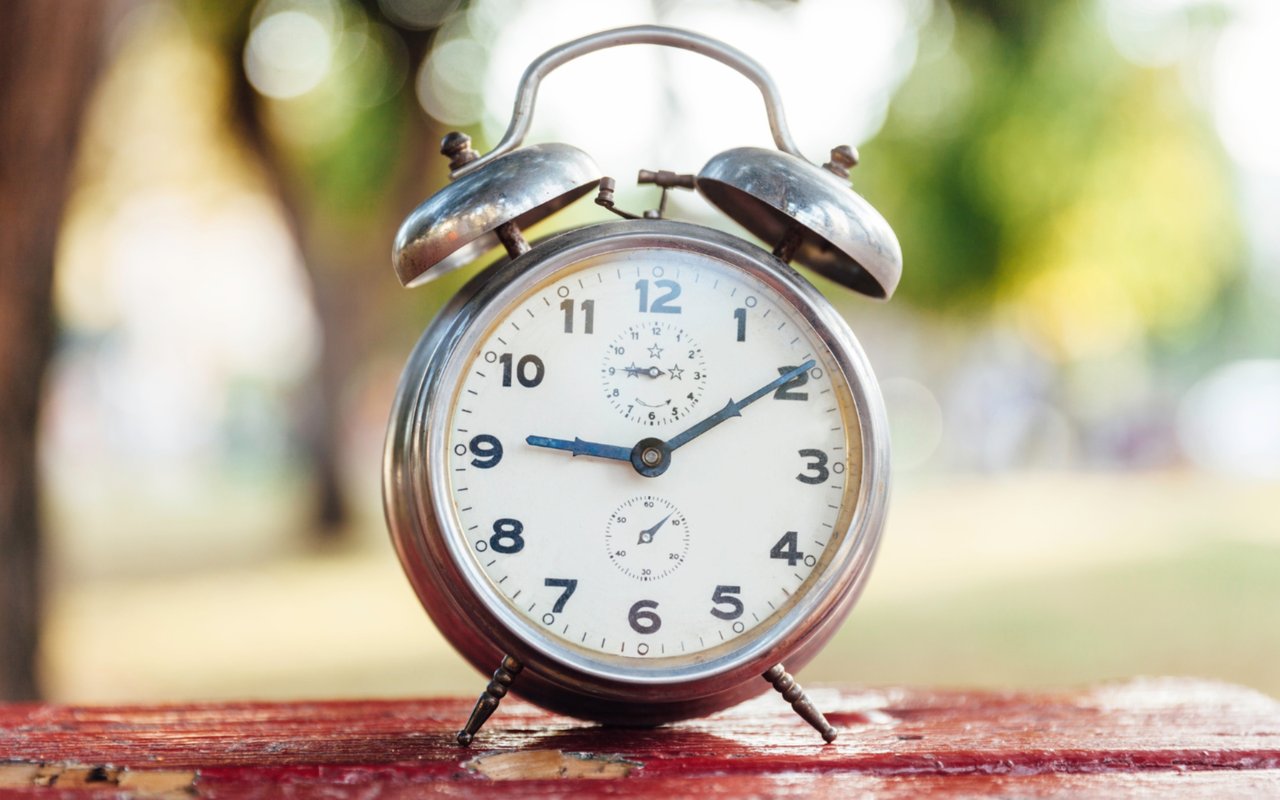
Are you tired of daylight saving time? With the end of yet another daylight saving time quickly approaching, you may be curious as to why we continue to “spring forward and fall back.” Is it due to farming? Decreasing energy usage? Or maybe to help our sleep schedules adjust to the decreasing daylight? In today’s blog, we are going to separate the facts from the fiction by highlighting 5 things you may not know about daylight saving time(DST).
It was invented by Benjamin Franklin.
The practice of DST can be attributed to or blamed on Benjamin Franklin, who came up with the idea of resetting clocks in the summer months as a way to conserve energy (hence the “saving”). The thought was that people could take advantage of the extra daylight in the evenings, thus reducing their need for electricity. However, as technology has modernized, there has become less and less of a need to continue with the practice.
Daylight Saving Time or Daylight Savings Time?
The correct pronunciation of DST has definitely become a point of confusion. According to TimeandDate, “Daylight Saving Time is often wrongly referred to as 'Daylight Savings,' with an 's' at the end. Other common variations are “Summer Time” and “Daylight-Saving Time.” The “daylight savings time” version is actually most common in Australia, Canada, and the United States, which is likely due to the term “savings” becoming popular in everyday contexts, like “savings account.”
The clocks actually change at 2 AM, but why?
Since its origins, it was decided that daylight saving time would begin at 2 a.m. because the thought was that fewer businesses would be affected by the time change. Even though the clocks are supposed to change in the middle of the night, it is recommended to start prepping a week before by adjusting your sleep schedule a little day-by-day.
Some states do not observe daylight saving time.
This may be surprising, but not all of the United States observes DST. Arizona, Hawaii, and several U.S. territories do not recognize the practice; so, if you’re looking to avoid changing back your clocks, you know where to move to.
It’s actually a hot topic of international debate.
When it comes to making decisions on daylight saving time, the United States has seen several proposals to remain on standard time or move to DST full-time. In fact, there have been more than 200 daylight saving bills and resolutions introduced in almost every state, according to the National Conference of State Legislatures. Although several of these states have passed bills in favor of permanent DST, none of the bills have received congressional approval.
With Europe making strides to end DST and more than 60% of all countries not observing the practice, we may not have to worry about changing our clocks back and forth forever. However, at least for this year, we want to remind you to “fall back” by turning your clocks back one hour on Saturday, October 31st in preparation for the ending of DST. For some tips and tricks on how to cope with the time change, check out this article on “4 Tips to Help Your Body Adjust”.