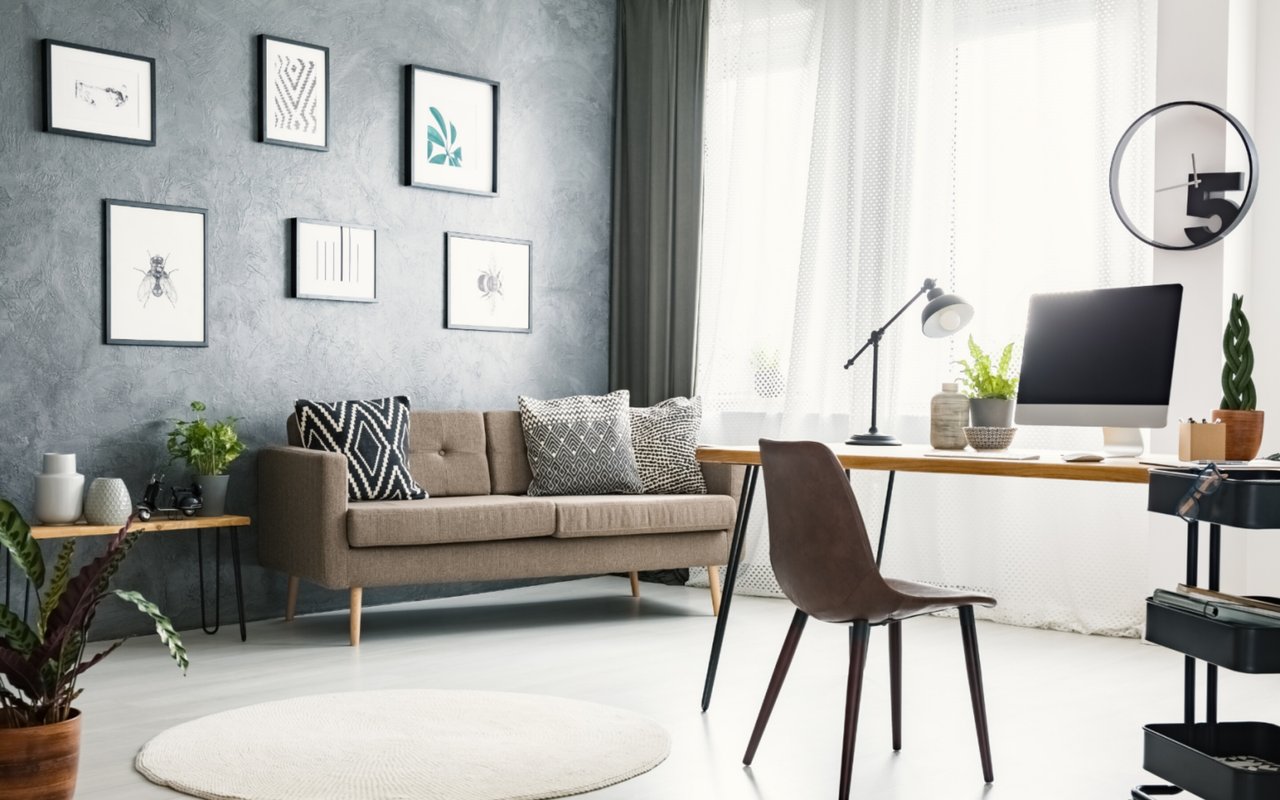
How to Create a Welcoming, Efficient, & Productive Home Office
We are all experiencing the adjustment to learning how to work from home. For some, it can be exciting because it offers an opportunity for real comfort and efficiency, but if your office space is too casual or isn’t effectively separated from the home environment, peak productivity may be lost. Pro-tip: Your California King bed may not be the best idea for your new home office if you plan on getting any actual work done.
While comfort is essential in any office, one that is too casual may seriously impede the ability to get things done. It is important to find a way to separate yourself from the rest of the things going on in your home and convey a sense of “off-limits” to all other normal and natural home sounds, interruptions, and activity.
Whether your home office is a designated space for running your own business, or simply a nook for paying bills and organizing schedules, you deserve more than a metal desk, fluorescent lighting, and a folding chair stuffed into the one spare corner of your house. Why? An office that reflects the design and comfort of the rest of your home and reflects your passion and interests will become a place that you will want to burn the midnight oil.
Our top five tips for creating a welcoming, efficient, & productive place to work:
1. Location, location, location.
The majority of your day is spent in your place of work. This space does not need to be large or expansive, but separation from other areas in the house is critical. Evaluate and find a space in your home that can be “your space”. For example, maybe this space is a guest room that is only used a few times out of the year. Keep all your work in this designated area and keep the non-office space in your home free of work items. This promotes a healthy balance and allows you to relax at home when you are not “at work”.
2. Let there be light.
Numerous studies have shown that natural light in office spaces improves worker satisfaction and productivity. The connection between natural light and Vitamin D is well studied. Vitamin D can promote better health in many ways, such as fighting depression, diabetes, and chronic pain. Natural light has also been shown to boost both productivity and revenue by allowing workers to feel more engaged and focused.
3. Don’t sacrifice form for function.
Consider your workflow and what equipment you need at your fingertips before investing in shelving and furniture for your home office. Your desk, shelves, and storage should serve you, not the other way around. Although functionality is a top priority in designing your home office, the furniture you choose should complement the design of your home as a whole, instead of feeling like the lifeless cubicle we all dread entering. Create a space that you enjoy and look forward to stepping into and this will create a positive work environment and promote your creativity throughout the workday.
4. Organize both vertically and horizontally.
Most often, your home office doesn’t allow for a lot of square footage, so it is important that you use the space you are given efficiently. Floating shelves on the walls to get papers off your desk is both a great option for practicality, but can also be pleasing to the eye. Invest in file folders, storage bins, baskets, or shelving that align with your work tactics. Are you a stacker or a filer? If you tend to make piles, find a basket that will allow you to organize your documents, notes, and papers. If you are one that prefers a spotless desktop, invest in furniture with drawers to both file and hide the unwanted mess that would otherwise clutter your workspace. Do you find yourself working from left to right? Does your paper trail have a distinct flow? These are other questions you may ask yourself when planning how to organize your office materials.
5. Ergonomics: prioritizing your health and wellness.
Your health, safety, and welfare are critical, therefore, the items you choose for your office should be ergonomically designed to promote your health and wellness while using them. Think about the angle of your computer monitor or the height of your desk. Think about whether your eyes are strained by the end of the day or if your wrists hurt from typing. Understanding ergonomics can prevent most workplace injuries by adjusting tools to the user, putting emphasis on proper posture to reduce the impact of repetitive movements. Having the option of working at your computer from both standing and sitting heights can enhance your creative problem-solving and thinking ability. Research shows that using a standing desk can boost brain power, improve your focus, reduce pain and discomfort, and increase your energy.
Looking for more home office inspiration? Visit our Home Office Design Pinterest board.
Words by: Emily Irish